Why This Matters
The Oldest Complete New Testament
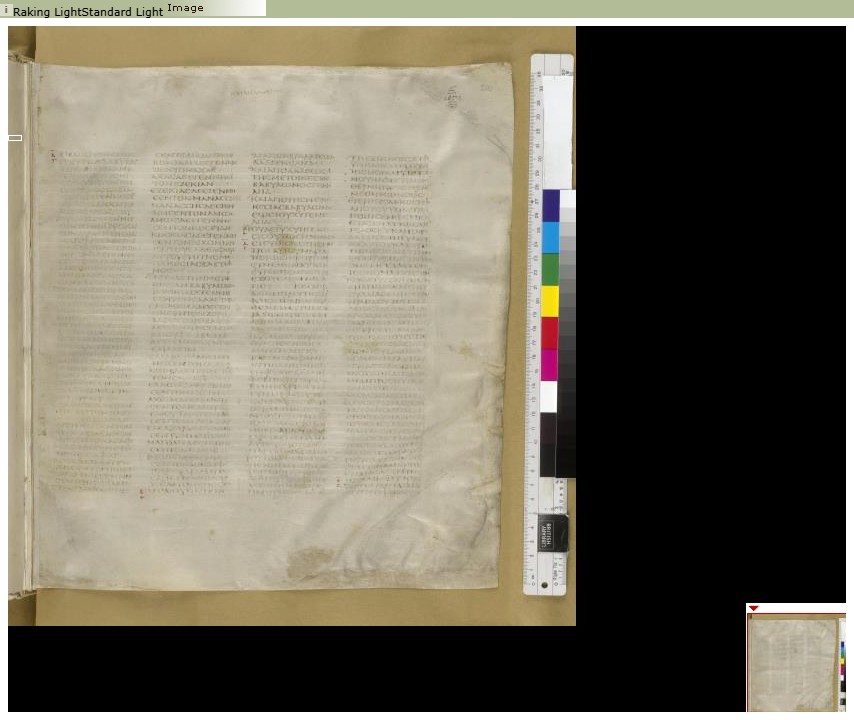
The Codex Sinaiticus, handwritten around 330–360 AD, is the oldest complete New Testament in existence — and the only complete Greek New Testament that pre-dates the 9th century. It is the closest we can get to what the eyewitnesses wrote and what the earliest church read.
Nothing Added, Nothing Left Out
This manuscript likely emerged from the scriptorium at Alexandria, where copying was laborious and enormously expensive — a single codex of this scale cost a king's ransom to produce. The scribes did not add anything they considered superfluous, and they did not leave anything out. What Sinaiticus contains is, in all likelihood, what the Alexandrian church considered the complete Bible — their canon.
Books That Were Removed
That canon includes books that were later removed: the Epistle of Barnabas, the Shepherd of Hermas, Tobit, Judith, Wisdom of Solomon, Sirach, 1 & 4 Maccabees. These were not marginal texts — the early church read them alongside Scripture, bound them into the same codex, and the New Testament authors knew and referenced their traditions. Jude directly quotes the Book of Enoch. Jesus observed Hanukkah (John 10:22), a feast that only exists because of Maccabean history.
Read the Original Language Yourself
The text is written in Koine Greek — the common Greek of the 1st-century Mediterranean world, the language the Apostles wrote in. Koine Greek is the most well-documented and accessible ancient language in the world, still actively taught and studied in seminaries, universities, and by self-directed learners worldwide. A reader today can learn Koine Greek and read these words exactly as they were written from the pen of the original authors — no intermediary, no translator's interpretation, just the text itself.
No Tool Like This Exists
Despite its monumental importance, no modern, accessible web tool exists that lets you place this ancient text side-by-side with what you read in church today and understand what changed, what was added, what was removed, and why. CodexLumen changes that.
Four Columns, One Truth
Compare seven ancient manuscript traditions spanning 1,700+ years — the Dead Sea Scrolls, the Septuagint, Codex Vaticanus, Codex Sinaiticus, Codex Alexandrinus, the Leningrad Codex, and the Textus Receptus — all in one view.
Manuscript Image
High-resolution photographs of the actual ancient parchment pages, navigable folio by folio as the scribes wrote them.
Original Greek & Hebrew
The text as it appears in each manuscript, with click-to-parse morphology — lemma, part of speech, tense, mood, case.
AI Literal Translation
Word-for-word faithful English, as close to the original as possible. No interpretation, no theological bias — just the text.
Modern Translation
The King James Version and other public-domain translations, side by side with the ancient text so you can see what changed.
Seven Ancient Sources, One Platform
CodexLumen brings together the most important manuscript traditions spanning 1,700+ years — from the Dead Sea Scrolls to the King James Version.
Brought to You by Our Proud Sponsors
See What the Earliest Christians Read
No paywalling of Scripture — ever. The ancient text belongs to everyone.
Open the Manuscript Viewer